Orchard Tutor ex-RJC grad/ACJC grad full time tutor for IGCSE IB Diploma IP GCE O level PSLE Primary, Secondary and International Schools Tuition Home Based Premium Education by eduKate Tuition Centre
Poi Ching School Students at eduKate Singapore Tuition Centre
Primary PSLE Results SEAB Syllabus MOE English, Math, Science Tuition specific to Poi Ching School Primary Syllabus. We take pride as fine educators, wise mentors, supporting motivators and creative innovators with your child’s development turning them into top students, focussed and worldly-wise.
Tuition in Tampines, Pinevale 6 Tampines St73, Singapore 528825
Referrals and recommendations from our loyal clients abound with majority of eduKate Tampines students coming from Poi Ching School.
P6 eduKate Poi Ching Students at Tampines Tuition Centre
Close to Poi Ching School at Pinevale Condominium
We also locate our tuition centre close to Poi Ching School so that your child has easy access to our top tutors from alma mater colleges RJC, ACJC, SMU, NTU. We are 50m away and takes 5 mins to walk over from Poi Ching.
Top Tutors, highly qualified, trained and current to PSLE Syllabus
We are a group of university graduate tutors with expert knowledge in the current MOE syllabus. We teach to understand everything according to the syllabus and then move onto solving challenging sums that students will encounter in their exams.
Our classes are conducted in a fully air-conditioned environment with the average tutor/student ratio of 1:5.
Our Current tutors
Ms Teo Yuet Ling: tutor from TPJC, UOL.
Ms Jeanine Cheok: tutor from RJC, SMU.
Ms Renee Kwek: tutor from TP, UOL.
Ms Yeo Hui Qing: tutor from TPJC, UOL.
Ms Kajol Singh: tutor from SAJC, NTU.
Our Custom Scheduling fits Poi Ching students perfectly
Our schedule in eduKate Tampines Tuition Centre caters specifically to Poi Ching’s school timetables and CCA’s. All new students will not have problems getting a suitable time slot in our class. One less headache for students and parents to attend our lessons.
Holistic Tuition Centre develops the total student
Give us a call to set up a tour around our centre and know more about our unique tuition programmes. Our quality programmes are developed to encapsulate a holistic development of your child’s psyche and let students gain confidence, enthusiastic in learning new things, become gracious and sociable.
eduKate Student from Poi Ching School gets good grades with the proper help from eduKate SG top tutors and developing a good attitude towards his studies.eduKate Tuition Singapore with Minister of Education, Mr Heng Swee Kiat, MOE SEAB PSLESEAB PSLE Students doing MOE Maths Primary 6 tuition in Tampines eduKate Singapore Tutorial Class
Our eduKate Tuition Centre “Team Building and Empowerment” programme for PSLE Primary students:
P6 eduKate Students at Tampines Tuition Centre goes to Climb Central for eduKate Holistic Programme
eduKate PSLE Studetns getting Instruction on safety and equipment during social team building 2014 Holistic programme. Importance of staying safe and being responsible is learnt here.
last check before we head out- eduKate Students gets final safety check by Climb Central Staff. Learning a new skill, equipment and peripheral in a short amount of time is the lesson here.
equipment briefing and being taught about their equipment. eduKate PSLE tuition class goes for their enrichment class at climb central. They learn to be confident and never to give up till they reach the top. plus their own bodies and physical properties. Science combines with mental strength in a real world situation.
being competitive and coming back strong is an important character trait. Primary students at Climb Central finds it tough to reach the top, but fights through the mental barrier and goes to the top
tutor Yuet Ling takes care of me… all the time. edukate PSLE student attends Holiday Programme for Holistic Development, Empowerment and Team Building
edukate student goes up Climb Central for Holiday enrichment programme primary school PSLE SEAB
I fell off a wall… and it was awesome! eduKate Student learns to fall and dust off the disappointment, persevere through the pain and get to the top
Now how do I get down?
Yes… Christmas is coming! and SMILE!!!
Call us to join the most progressive tuition centre in Tampines:
Yuet Ling: +65 8222 6327
email: admin@edukatesg.com
Poi Ching Tuition at Tampines Maths Science English Primary PSLE Syllabus
Compiled by eduKate SG Tuition Centre Tampines and Punggol for Primary 4, Primary 5 and Primary 6 students, used on Character Traits in eduKate SG Creative Writing Programme for kids Vocabulary worksheets. Best used to describe intensive characters effectively for PSLE SEAB English composition and vocabulary in the new Syllabus 2015 format.
The following Top100 list has expanded to 255 words and keeps growing.
Active
Adaptable
Adventurous
Affable
Affectionate
Aggreeable
Aggressive
Ambitious
Amicable
Amusing
Annoying
Arrogant
Articulate
Athletic
Awkward
Boastful
Bold
Bossy
Brave
Brash
Bright
Bored
Broad-minded
Calm
Careful
Careless
Caring
Cautious
Charming
Chatty
Cheerful
Clean
Clumsy
Colorful
Communicative
Compassionate
Complex
Complete
Conceited
Confident
Considerate
Conscientious
Cooperative
Courageous
Courteous
Cowardly
Creative
Curious
Dainty
Daring
Dark
Decisive
Defiant
Delusional
Demanding
Determined
Devastated
Devout
Disgruntled
Discerning
Diligent
Diplomatic
Discreet
Dynamic
Eager
Easy-going
Efficient
Embarrassed
Empathic
Emotional
Enjoyable
Enthusiastic
Energetic
Excited
Exuberant
Fair
Faithful
Fanatical
Fancy
Fashionable
Fearless
Fighter
Forceful
Forgiving
Frank
Free spirited
Friendly
Frustrated
Fun-loving
Funny
Generous
Gentle
Giving
Gorgeous
Good
Gracious
Gregarious
Grumpy
Grouchy
Handsome
Happy
Hard-working
Helpful
Honest
Hopeful
Humble
Humorous
Idealist
Imaginative
Impartial
Impulsive
Independent
Intelligent
Intellectual
Intuitive
Inventive
Jealous
Joyful
Judgmental
Keen
Kind
Knowledgeable
Lazy
Leader
Light-hearted
Likeable
Lively
Lovable
Loving
Loyal
Loud
Lucky
Manipulative
Materialistic
Mature
Mean
Melancholy
Messy
Mischievous
Modest
Moody
Naïve
Nasty
Neat
Nervous
Nice
Noisy
Noble
Obnoxious
Opinionated
Organized
Outgoing
Optimistic
Passive
Passionate
Patient
Patriotic
Pessimistic
Perfectionist
Personable
Persistent
Pitiful
Pioneering
Philosophical
Plain
Placid
Pleasant
Pleasing
Plucky
Poor
Polite
Popular
Powerful
Practical
Pretty
Prim
Pro-active
Proper
Proud
Questionable
Quick-witted
Quicksilver
Quiet
Radical
Rational
Realistic
Rebellious
Reflective
Relaxed
Reliable
Religious
Reserved
Respectful
Responsible
Resourceful
Reverent
Rich
Rigid
Romantic
Rude
Sad
Sarcastic
Self-confident
Self-conscious
Self-disciplined
Selfish
Sensible
Sensitive
Serious
Sharp
Short
Shy
Silly
Simple
Simple-minded
Sincere
Smart
Sociable
Stable
Straightforward
Strong
Stubborn
Studious
Stupid
Successful
Sympathetic
Swift
Tall
Tantalizing
Tender
Tense
Thoughtful
Thrilling
Tidy
Timid
Tireless
Tolerant
Tough
Tricky
Trickster
Trusting
Ugly
Unassuming
Understanding
Unhappy
Unique
Unlucky
Vain
Versatile
Warm
Warm hearted
Wild
Willing
Wise
Witty
English Tuition eduKateSG Mee Toh Primary Students at Punggol Prive Condo
SEAB MOE Syllabus PSLE and GCE O’ levels Singapore for Primary and Secondary Schools is by far the main contributor to the social mobility of Singaporeans.
PSLE Student doing Mathematics MOE SEAB Syllabus Singapore in Tampines Tuition Centre Class
It is the first major exam that starts the path of development for a young individual by training, developing and constructing the psyche of the ultimate student and turning them into a complete Singaporean adult that is capable of competing in this 21st Century workforce.
With SG50, we have now witnessed the effectiveness of education in transforming us into a metropolitan first world country, one that only has human resource that drives this country.
We survived, and then thrived against all odds, whilst in the face of competition against many other resource-rich nations. All this did not come from just plain luck.
We have witnessed too, with the PSLE and streaming of students into secondary schools, how much their PSLE scores alter their outcomes when they grow up.
And I am sure we have to keep our education world class in years to come, even more so with the huge external forces from other markets within the burgeoning Asian region as well as pressures from the international market to keep up-to-date and solve every problem that we will face in the future.
We cannot be naive and think our problems can be solved with a normal, mediocre education, with a low-skilled and highly unmotivated work force. That is not the mark of a first world country. We need to have something special to keep competition at bay.
Dynamism is a highly valued characteristic our children should possess.
I shall loosely quote Gordon Ramsay, “You can’t run a “country” if you can’t even run your own bath.”
And hence, education, training, intelligence, creativity, innovation and persevering hardwork are the hallmarks of a successful country. We need to adopt the mentality that we are larger than what we are, that our world is not restricted to the red dot that makes Singapore a country. But rather, we are in a global community that requires global competitiveness and social skills. And that comes from a world class education.
We need a large canvas of intelligence and expertise, multitudes of captains of industries, pools of talents, and scores of highly skilled individuals to deal with the increasingly convoluted society and economy of the future. And that comes from a world class education.
We, as a nation, bear witness to social mobility, from our previous generations to current generations, and am sure, to our future generations, that doing well in education equates to better salaries, better standards of living and a stable economy. But this didn’t just happen to an individual, and the last 50 years, we have all moved up the social ladder as a collective community. And we have continued to be socially mobile. And that again, comes from a world class education.
As a nation, we have improved leaps and bounds, again, that didn’t just happen by plain luck. We have our PM Lee Kuan Yew to thank for that. But even more so, our society as a whole has taken those steps to rid ourselves of the third world status and decided that this should be the way to go, forwards. And that should always be the way to go, forwards.
All this leads to one conclusion, that of a student that does well in his/her education, will do well in life. That is a rule of thumb of any Singaporean student, and its the easiest and distinct way by far to move up the ladder and achieve success in life.
Let not detractors say that PSLE is getting too hard, for being soft only weakens our pool of talented future human resources. For in Singapore, strength comes from advancing together, and we have to be careful when a minority wants to re-invent the wheel and begs for an easy PSLE.
Let me quote some articles statistics that shows our education is working:
We do need changes to adapt to the ever changing world, and so our education shall be tweaked to allow such changes. But changing the whole system, on something that has worked well, is just suicidal and cataclysmic.
The problem with education is that the effects are not seen straight off, and only in 20 years time, and maybe another 5-10 years after that when the student graduates and starts climbing up their career and contributes to society. Only then will we feel the effect that will be shouldered by the next generation with a wrong education model.
We have come far from where we began 50 years ago, and our success has come from truly hard intelligent pragmatic work. The recipe for success did not come from being weak, or having a compromised education/society. We do have to be careful how any changes will alter our state, as if its for the better, no one complains; but for the worse, everyone pays, ultimately.
Generally, and critically, the higher the education of a Singaporean, the higher they climb up the social ladder. And that is fact. And that starts with the PSLE. And that, is one that parents should never waver in their child’s education.
Punggol Female Tutors attending to Primary students when they find it difficult to understand. Explain when they need it, or if we find they can do it, we will make them think independently
Herein lies the class contents and SEAB MOE Syllabus of our 2015 tutorial classes for English, Maths and Science tuition at both eduKate Tampines and Punggol Branch. MOE PSLE syllabus will be adhered to strictly with additions as listed below applied for your child’s character development and skill improvements. PSLE Syllabus by SEAB MOE can be found at bottom of this page.
Primary English
eduKate’s syllabus covers MOE guideline PSLE Syllabus English 2015 as our core lesson content.
Vocabulary
Grammar
Synthesis
Composition (Situational and Continuous)
Comprehension
Cloze Passage
Listening Comprehension
Oral and speech
In addition, we incorporate the following into our English programme:
Creative writing
Historical Knowledge
General Knowledge
Moral Ethics and Good Manners
Introduction to Newspapers and Current Affairs
Reading & Appreciation of Classical Children Story Books
English and its use in Technology and Social Media
Primary Mathematics
eduKate’s syllabus for Mathematics follows MOE guideline in accordance to cohort requirements from Primary 1-6.
In addition, we shall incorporate the following into our Mathematics programme:
Conceptual Understanding and Skill Proficiency
Heuristics and application to Problem Sums
Every day use of Mathematics
PSLE Preparatory Mathematics Classes in October 2014
PSLE Intensive Mathematics Classes in June-October 2015
eduKate Singapore Tampines Tuition Centre Student doing Secondary Math
Below are a list of schools that we currently cater to in accordance to our current location
Tampines Tuition Branch:
Angsana Primary School
Chongzheng Primary School
East Spring Primary School
East View Primary School
Gongshang Primary School
Junyuan Primary School
Poi Ching School
St. Hilda’s Primary School
Tampines North Primary School
Tampines Primary School
Yumin Primary School
Dunman Secondary School
East Spring Secondary School
East View Secondary School
Junyuan Secondary School
Ngee Ann Secondary School
Pasir Ris Secondary School
Springfield Secondary School
St. Hilda’s Secondary School
Tampines Secondary School
Tampines Junior College
United World College of South East Asia (Tampines Campus)
Canossa Convent Primary School
East Coast Primary School
Eunos Primary School
Geylang Methodist School (Primary)
Haig Girls’ School
Macpherson Primary School
Maha Bodhi School
Maris Stella High School
Ngee Ann Primary School
St. Gabriel’s Primary School
Tao Nan School
Yangzheng Primary School
Bartley Secondary School
CHIJ Katong Convent
Geylang Methodist School (Secondary)
MacPherson Secondary School
Manjusri Secondary School
Ping Yi Secondary School
St. Gabriel’s Secondary School
Zhonghua Secondary School
Nanyang Junior College
Punggol Tuition Branch:
Casuarina Primary School
Compassvale Primary School
Coral Primary School
Edgefield Primary School
Elias Park Primary School
Greendale Primary School
Horizon Primary School
Loyang Primary School
Mee Toh School
Meridian Primary School
North Vista Primary School
Palm View Primary School
Park View Primary School
Pasir Ris Primary School
Punggol Primary School
Punggol Green Primary School
Punggol View Primary School
Seng Kang Primary School
White Sands Primary School
Yio Chu Kang Primary School
Compassvale Secondary School
Coral Secondary School
Edgefield Secondary School
Greendale Secondary School
Greenview Secondary School
Hai Sing Catholic School
Loyang Secondary School
North Vista Secondary School
Pasir Ris Crest Secondary School
Punggol Secondary School
Seng Kang Secondary School
Siglap Secondary School
Meridian Junior College
North Spring Primary School
Rivervale Primary School
CHIJ St. Joseph’s Convent
Anchor Green Primary School
Fernvale Primary School
Nan Chiau Primary School
Sengkang Green Primary School
Springdale Primary School
Nan Chiau High School
Pei Hwa Secondary School
Secondary Mathematics GCE O levels at eduKate SG Tuition Centre
Current PSLE Syllabus outlined by SEAB MOE website Jan 2015 onwards
PSLE ENGLISH LANGUAGE
Implemented from the Year of Examination 2015
PURPOSE OF EXAMINATION
The purpose of the examination is to assess the candidates’ attainment in English Language based on the Learning Outcomes stated in the English Language Syllabus 2010: Primary & Secondary (Express / Normal [Academic]). The Learning Outcomes form the basis for the assessment objectives listed on page 3.
ASSESSMENT OBJECTIVES
In this English Language examination, candidates will be assessed on their ability to:
In Paper 1 (Writing)
AO1 write to suit purpose, audience and context in a way that is clear and effective
AO2 use appropriate register and tone in a variety of texts
AO3 generate and select relevant ideas, organising and expressing them in a coherentand cohesive manner
AO4 use correct grammar, spelling and punctuation
AO5 use a variety of vocabulary appropriately, with clarity and precision
In Paper 2 (Language Use and Comprehension)
AO1 demonstrate comprehension of a range of texts at the literal and inferential levels
AO2 show understanding of implied meaning, and make judgement and evaluation, byreading and/or viewing closely and critically
AO3 show understanding of how contextual use of lexical and grammatical itemsshapes meaning
AO4 demonstrate the correct use of grammar, spelling and punctuation, and theappropriate use of vocabulary in given contexts
In Paper 3 (Listening Comprehension)
AO1 demonstrate understanding of the content of a variety of spoken texts at the literal and inferential levels
AO2 identify key messages, main ideas and details in a variety of spoken texts
AO3 infer and draw conclusions by listening critically
In Paper 4 (Oral Communication)
AO1 read with good pronunciation, clear articulation and appropriate intonation in order to convey the information, ideas and feelings in a passage
AO2 produce a well-paced, fluent reading of a passage
AO3 express their personal opinions, ideas and experiences clearly and effectively inconversing with the examiner
AO4 speak fluently and with grammatical accuracy, using a range of appropriatevocabulary and structures
EXAMINATION FORMAT
Candidates will be assessed in the following areas:
PAPER
COMPONENT
ITEM TYPE
NO. OF ITEMS
MARKS
WEIGHTING
DURATION
1 (Writing)
Situational Writing Continuous Writing
OE OE
1 1
15 40
27.5%
1 h 10 min
2
(Language Use and Comprehension)
Booklet A:
Grammar
Vocabulary
Vocabulary Cloze
Visual Text Comprehension
Booklet B:
Grammar Cloze
Editing for Spelling and Grammar
Comprehension Cloze
Synthesis / Transformation
Comprehension OE
MCQ MCQ MCQ MCQ
OE OE
OE OE OE
10 5 5 8
10 12
15 5 10
10 5 5 8
10 12
15 10 20
47.5%
1 h 50 min
3
(Listening Comprehension)
Listening Comprehension
MCQ
20
20
10%
About 35 min
4
(Oral Communication)
Reading Aloud
Stimulus-based Conversation
OE OE
1 passage
1 visual stimulus
10 20
15%
About 10 min (5 min preparation time; about 5 min examination time)
Part 1 (Situational Writing): Candidates will be required to write a short functional piece (e.g. letter, email, report) to suit the purpose, audience and context of a given situation.
Part 2 (Continuous Writing): Candidates will be required to write a composition of at least 150 words in continuous prose on a given topic. Three pictures will be provided on the topic offering different angles of interpretation. Candidates may also come up with their own interpretation of the topic.
Paper 2 (Language Use and Comprehension)
Candidates will be assessed on their ability to use language correctly and to comprehend visual and textual information.
Paper 3 (Listening Comprehension)
This paper comprises 20 multiple-choice questions which test candidates’ ability to understand spoken English. The texts may be in the form of news items, announcements, advertisements, instructions, explanations, conversations, speeches and stories. Graphic representations will be used for the first seven items. Each text will be read twice. Time will be given for candidates to read the questions before the first reading of each text.
Paper 4 (Oral Communication)
For Reading Aloud, candidates are assessed on their ability to pronounce and articulate words clearly, as well as their ability to read fluently with appropriate expression and rhythm. For Stimulus-based Conversation, candidates are assessed on their ability to give a personal response to a visual stimulus and engage in a conversation on a relevant topic.
PSLE MATHEMATICS
For Examination from 2009
PURPOSE OF THE EXAMINATION
The purpose of the Mathematics examination is to assess pupils’ attainment in mathematics at the end of primary education with respect to the objectives of the 2007 Mathematics (Primary) syllabus. pdf file-PSLE-maths-primary-2007
ASSESSMENT OBJECTIVES
Pupils should be able to:
recall specific mathematical facts, concepts, rules and formulae, and performstraightforward computations. (Knowledge)
interpret data and use mathematical concepts, rules and formulae, and solveroutine or familiar mathematical problems. (Comprehension)
analyse data and/or apply mathematical concepts, rules and formulae in acomplex situation, and solve unfamiliar problems. (Application & Analysis)EXAMINATION FORMATThe examination consists of two written papers comprising three booklets.
Paper
Booklet
Item Type
Number of questions
Number of marks per question
Weighting
Duration
1
A
Multiple-choice
10
1
10%
50 min
5
2
10%
B
Short-answer
10
1
10%
5
2
10%
2
Short-answer
5
2
10%
1 h 40 min
Structured / Long-answer
13
3, 4, 5
50%
Total
48
–
100%
2 h 30 min
Notes
Both papers will be scheduled on the same day with a break between the two papers.
Paper 1 comprises two booklets. The use of calculators is not allowed.
Paper 2 comprises one booklet. The use of calculators is allowed.
Item Types
Multiple-choice Question
For each question, four options are provided of which only one is the correct answer. A candidate has to choose one of the options as his correct answer.
Short-answer Question
For each question, a candidate has to write his answer in the space provided. Any unit required in an answer is provided and a candidate has to give his answer in that unit.
Structured / Long-answer Question
For each question, a candidate has to show his method of solution (working steps) clearly and write his answer(s) in the space(s) provided.
PSLE SCIENCE
For examination from 2010
PURPOSE OF THE EXAMINATION
The PSLE Science Paper assesses pupils’ attainment in Science with respect to the aims of Primary Science Education as stated in the 2008 Science (Primary) syllabus pdf file- psle-science-primary-2008.
ASSESSMENT OBJECTIVES
The assessment objectives are as follows:
Knowledge with UnderstandingPupils should be able to demonstrate knowledge and understanding of scientific facts, concepts and principles.
Application of Knowledge and Process SkillsPupils should be able to:
apply scientific facts, concepts and principles to new situations.
use one or a combination of the following basic process skills:
Observing
Comparing
Classifying
Using apparatus and equipment
Communicating
Inferring
Predicting
Analysing
Generating possibilities
Evaluating
Formulating hypothesis
EXAMINATION FORMAT Format of Paper
The examination consists of one written paper comprising two booklets, Booklet A and Booklet B.
Table 1
Booklet
Item Type
Number of questions
Number of marks per question
Weighting (%)
A
Multiple-choice
30
2
60
B
Open-ended
14
2,3,4
40
I Booklet A consists of 30 multiple-choice questions. Each multiple-choice question carries 2 marks.
II Booklet B consists of 14 open-ended questions. Each open-ended question carries 2, 3 or 4 marks.
Duration of Paper
The duration of the paper is 1 hour 45 minutes.
the above is downloaded from seab.com.sg and is correct as of 3rd April 2015. Any revisions from this date on shall be updated by educatesg.com and updated with notes. This page is intended for use by edukate Singapore Tuition Centre students and parents for their reference and examination planning schedule. Kindly disregard if otherwise. Thank you.
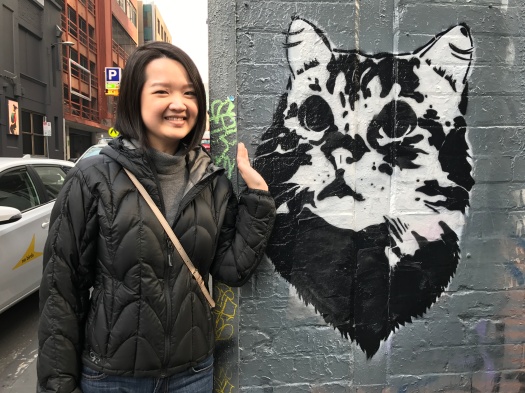
Yuet Ling in Melbourne CBD touring the City, Australia.Tutor Yuet Ling LV Takashimaya. SGP.Tutor Yuet Ling teaching a PSLE Creative Writing class. It is all about the students’ progress. Give it a go, organise their thoughts and arm them with the best knowledge.Tutor Yuet Ling at LV MBSTutor Yuet Ling Stalactites Restaurant Melbourne CBD AustraliaOne of our residents Pebbles.




 Orchard Road Tutor English Math Science Small Group Tuition