Rubik’s Cube Class in eduKate

Hello students, from our classes, I have compiled all the materials for Rubik’s cube here. Do read through it again and make sure you get to understand why mathematics and science is combined to bring about the solution for Rubik’s cube.

Aim of lesson

  1. To learn how to solve a problem through algorithm programming
  2. To improve hand-eye coordination
  3. To improve focus
  4. To learn tenacity
  5. To understand that every mathematical problem can be solved using a series of repeated steps
  6. To compete within rules and achieve objectives

Competition:

The competition are as follows:

1st prize SGD$50.00 goes to the first student that can solve an eduKate randomised Rubik’s Cube within 15 seconds.

2nd prize SGD$30.00 goes to the first student that can solve an eduKate randomised Rubik’s Cube within 40 seconds.

3rd prize SGD$20.00 goes to the first student that can solve an eduKate randomised Rubik’s Cube within 60 seconds.

This also means that one student can actually win all three prizes, and all winners will have their names posted in this blog with the dates and times achieved. All competitors are to solve the cube in the presence of eduKate’s tutors and must be timed using a sport stacker timing device. Also, a video will be taken during this attempt to officiate its occurrence.

1st Prize Winner: ________________

2nd Prize Winner:________________

3rd Prize Winner:________________

What is the history of Rubik’s cube?

http://www.rubiks.com/history

Beginner’s algorithm:

http://ruwix.com/the-rubiks-cube/how-to-solve-the-rubiks-cube-beginners-method/

http://www.wikihow.com/Solve-a-Rubik’s-Cube-(Easy-Move-Notation)

Research by MIT (Massachusetts Institute of Technology)

Advanced Mathematics and Scientific Research into Rubik’s Cube algorithm on MIT News http://newsoffice.mit.edu/2011/rubiks-cube-0629

Speedcuber teaching 

What is an algorithm:

An algorithm (pronounced AL-go-rith-um) is a procedure or formula for solving a problem. The word derives from the name of the mathematician, Mohammed ibn-Musa al-Khwarizmi, who was part of the royal court in Baghdad and who lived from about 780 to 850. Al-Khwarizmi’s work is the likely source for the word algebra as well. A computer program can be viewed as an elaborate algorithm.

In mathematics and computer science, an algorithm usually means a small procedure that solves a recurrent problem.

from (http://whatis.techtarget.com/definition/algorithm)

2014 Rubik’s Cube Competition

Top 5 Tips to Study for PSLE

1) Get yourself a dedicated studystation.

Have your assessment books ready and arranged at arms length. Have all your equipment organized within a radius of 1.5 metres. Have water, food and whatever you need to be comfortable near you so that you don’t have to walk away to pick things up. Have a dedicated studystation that does not need packing and unpacking every time you study. It is yours and you do not need to put all your books away after you are done studying.

That way, the moment you sit down, you are all set to study. Walk away when you are tired, and when you are refreshed, come back and study. No packing. No unpacking. It is always there. The easier you settle down to do your studies, the less time and energy you waste walking around getting your studying organized. Because it is always there for you and organized as well in a small footprint of your house. You don’t have to grab things from all over the house when it is located only in one place.

2) PSLE is like any other examination.

Every time you go for examinations, treat it as if it is your PSLE. Primary 6 has 4 main exams before the PSLE. CA1, SA1, CA2, Prelimns. Treat all these exams like PSLE. Study hard, prepare for it, and keep evaluating where you can improve yourself. With experience, PSLE will be a breeze and you’ll get it done proper. Organize yourself into studying for English PSLE, Mother Tongue PSLE, Science PSLE and Mathematics PSLE and when the day comes, psyche yourself up and get those grades.

3) Improve your memory.

Without a good memory, it will always be the problem of learning something and forgetting it altogether. So why start to begin with? Spend time memorizing what you learn and do it the same day that the topic was taught to you. Also learn tricks to improve your memory.

Generally speaking, to memorize anything is basically a case of not forgetting. Hence, the more we spend time repeating something, the lesser the chance that we will forget something. Come back again and test yourself another day just to make sure you remember it and over time, it will be in your long term memory banks.

4) Speed is mind over matter.

Not completing a paper is the worse way one can lose marks. PSLE in Singapore generally runs within a week and the papers are completed in 1-2 hours. There are situations where students mismanage time and spends too much time on questions. To solve this problem, allocate time for your studies and set an alarm whenever you attempt a question.

General guidelines are: 1 mark for every minute.

So if you attempt a 5 mark question, you are only allowed 5 minutes to complete it. Past that, you will need to jump this question and start doing the next question. Come back and attempt it when you have completed the rest of the questions.

5) Ask and you shall receive.

This is by far the most important thing to do for PSLE preparation. Teachers, parents, friends and family will not know what you don’t know unless you ask. The more you communicate your needs, the more people can help. Tell them what problems you face. There is no problem so big it cannot be solved and no problems too silly that they will make fun of you. Everyone has to start learning from basics sometime before they become masters. And master you will.

“He who asks a question is a fool for five minutes; he who does not ask a question remains a fool forever.” – Chinese proverb

Punggol Small Group Tuition English Mathematics and Science
Punggol Female Tutors attending to Primary students when they find it difficult to understand

punggol english math science tuition primary

edukate Punggol Tuition English Math Science Creative Writing
Punggol Tuition Centre for English Math and Science

School Terms and Holidays 2015

Herein lies important dates for Singapore schools and our operating schedules for 2015. Parents take note that eduKate SG operates on all days except public holidays stated in SECTION 3.2 

(all information are subject to changes from MOE and is only intended to be used as a rough guideline. dated 4th Nov 2014)

extract from MOE website:

School Terms and Holidays For 2015

1.0) The school year for 2015 for all MOE primary and secondary schools will start from Friday, 2 January and end on Friday, 20 November 2015. This takes into account 40 weeks of curriculum time for teaching and learning before the start of the national examinations, and six weeks of school vacation at end of year for teachers and students.

1.1) School Calendar 2015

PRIMARY & SECONDARY
Semester I
Term I Fri 2 Jan – Fri 13 Mar
Term II Mon 23 Mar to Fri 29 May
Semester II
Term III Mon 29 Jun to Fri 4 Sep
Term IV Mon 14 Sep to Fri 20 Nov
JUNIOR COLLEGE (JC) Year 1 & Millennia Institute (MI) Year 1 MI Year 2 JC Year 2 & MI Year 3
Semester I
Term I Mon 2 Feb – Fri 13 Mar Mon 5 Jan – Fri 13 Mar
Term II Mon 23 Mar to Fri 29 May
Semester II
Term III Mon 29 Jun to Fri 4 Sep
Term IV Mon 14 Sep to Fri 20 Nov Mon 14 Sep to end of ‘A’-level exams

1.2) School Vacation 2015

2.0) The four vacation periods for schools, junior colleges and centralised institute for 2015 will be as follows:

PRI & SEC
Between Terms I & II Sat 14 Mar – Sun 22 Mar
Between Semesters I & II Sat 30 May – Sun 28 Jun
Between Terms III & IV Sat 5 Sep – Sun 13 Sep
At End of School Year Sat 21 Nov – Thu 31 Dec
JC Year 1,
MI Year 1 & MI Year 2
JC Year 2 &
MI Year 3
Between Terms I & II Sat 14 Mar – Sun 22 Mar
Between Semesters I & II Sat 30 May – Sun 28 Jun
Between Terms III & IV Sat 5 Sep – Sun 13 Sep
At End of School Year Sat 21 Nov – Thu 31 Dec End of ‘A’ Level exams – Thu 31 Dec


3.0) The scheduled school holidays and public holidays for 2015 will be as follows:

3.1) Scheduled School Holidays 2015

Youth Day Sun 5 Jul
(The following Monday, 6 Jul 2015 will be a scheduled school holiday)
Teachers’ Day Fri 4 Sept
Children’s Day
for primary schools and primary sections of full schools only)
Fri 9 Oct

3.2) Public Holidays 2015

Term I New Year’s Day Thu 1 Jan
Chinese New Year Thu 19 Feb
Fri 20 Feb
Term II Good Friday Fri 3 Apr
Labour Day Fri 1 May
Vesak Day Mon 1 Jun
Term III Hari Raya Puasa Fri 17 Jul
National Day *Sun 9 Aug
Term IV Hari Raya Haji Thu 24 Sep
Deepavali **Tue 10 Nov
Christmas Day Fri 25 Dec
*The next day, Mon 10 Aug 2015, will be a public holiday.
**Tentatively, Deepavali will fall on 10 November in 2015. This date will need to be reconfirmed against the Hindu Almanac when it is available. Should there be a change in date, the Ministry of Manpower will issue a media release to announce the change accordingly.


4) The school terms and holidays for 2015 is available on the MOE’s website atwww.moe.gov.sg/schools/terms-and-holidays/2015/


prepared by Wong Kin Leong

edukate SG

Tampines St 73

Singapore

Classes for 2015

Herein lies the class contents and SEAB MOE Syllabus of our 2015 tutorial classes for English, Maths and Science tuition at both eduKate Tampines and Punggol Branch. MOE PSLE syllabus will be adhered to strictly with additions as listed below applied for your child’s character development and skill improvements. PSLE Syllabus by SEAB MOE can be found at bottom of this page.

Primary English

eduKate’s syllabus covers MOE guideline PSLE Syllabus English 2015 as our core lesson content.

  • Vocabulary
  • Grammar
  • Synthesis
  • Composition (Situational and Continuous)
  • Comprehension
  • Cloze Passage
  • Listening Comprehension
  • Oral and speech

In addition, we incorporate the following into our English programme:

  • Creative writing
  • Historical Knowledge
  • General Knowledge
  • Moral Ethics and Good Manners
  • Introduction to Newspapers and Current Affairs
  • Reading & Appreciation of Classical Children Story Books
  • English and its use in Technology and Social Media

Primary Mathematics

eduKate’s syllabus for Mathematics follows MOE guideline in accordance to cohort requirements from Primary 1-6.

In addition, we shall incorporate the following into our Mathematics programme:

  • Conceptual Understanding and Skill Proficiency
  • Heuristics and application to Problem Sums
  • Every day use of Mathematics
  • PSLE Preparatory Mathematics Classes in October 2014
  • PSLE Intensive Mathematics Classes in June-October 2015
eduKate Singapore Tampines Tuition Centre Student doing Secondary Math

Below are a list of schools that we currently cater to in accordance to our current location

Tampines Tuition Branch:

  • Angsana Primary School
  • Chongzheng Primary School
  • East Spring Primary School
  • East View Primary School
  • Gongshang Primary School
  • Junyuan Primary School
  • Poi Ching School
  • St. Hilda’s Primary School
  • Tampines North Primary School
  • Tampines Primary School
  • Yumin Primary School
  • Dunman Secondary School
  • East Spring Secondary School
  • East View Secondary School
  • Junyuan Secondary School
  • Ngee Ann Secondary School
  • Pasir Ris Secondary School
  • Springfield Secondary School
  • St. Hilda’s Secondary School
  • Tampines Secondary School
  • Tampines Junior College
  • United World College of South East Asia (Tampines Campus)
  • Canossa Convent Primary School
  • East Coast Primary School
  • Eunos Primary School
  • Geylang Methodist School (Primary)
  • Haig Girls’ School
  • Macpherson Primary School
  • Maha Bodhi School
  • Maris Stella High School
  • Ngee Ann Primary School
  • St. Gabriel’s Primary School
  • Tao Nan School
  • Yangzheng Primary School
  • Bartley Secondary School
  • CHIJ Katong Convent
  • Geylang Methodist School (Secondary)
  • MacPherson Secondary School
  • Manjusri Secondary School
  • Ping Yi Secondary School
  • St. Gabriel’s Secondary School
  • Zhonghua Secondary School
  • Nanyang Junior College

Punggol Tuition Branch:

  • Casuarina Primary School
  • Compassvale Primary School
  • Coral Primary School
  • Edgefield Primary School
  • Elias Park Primary School
  • Greendale Primary School
  • Horizon Primary School
  • Loyang Primary School
  • Mee Toh School
  • Meridian Primary School
  • North Vista Primary School
  • Palm View Primary School
  • Park View Primary School
  • Pasir Ris Primary School
  • Punggol Primary School
  • Punggol Green Primary School
  • Punggol View Primary School
  • Seng Kang Primary School
  • White Sands Primary School
  • Yio Chu Kang Primary School
  • Compassvale Secondary School
  • Coral Secondary School
  • Edgefield Secondary School
  • Greendale Secondary School
  • Greenview Secondary School
  • Hai Sing Catholic School
  • Loyang Secondary School
  • North Vista Secondary School
  • Pasir Ris Crest Secondary School
  • Punggol Secondary School
  • Seng Kang Secondary School
  • Siglap Secondary School
  • Meridian Junior College
  • North Spring Primary School
  • Rivervale Primary School
  • CHIJ St. Joseph’s Convent
  • Anchor Green Primary School
  • Fernvale Primary School
  • Nan Chiau Primary School
  • Sengkang Green Primary School
  • Springdale Primary School
  • Nan Chiau High School
  • Pei Hwa Secondary School
Secondary Mathematics GCE O levels at eduKate SG Tuition Centre

Current PSLE Syllabus outlined by SEAB MOE website Jan 2015 onwards

PSLE ENGLISH LANGUAGE

Implemented from the Year of Examination 2015

PURPOSE OF EXAMINATION

The purpose of the examination is to assess the candidates’ attainment in English Language based on the Learning Outcomes stated in the English Language Syllabus 2010: Primary & Secondary (Express / Normal [Academic]). The Learning Outcomes form the basis for the assessment objectives listed on page 3.

ASSESSMENT OBJECTIVES

In this English Language examination, candidates will be assessed on their ability to:

In Paper 1 (Writing)

  1. AO1  write to suit purpose, audience and context in a way that is clear and effective
  2. AO2  use appropriate register and tone in a variety of texts
  3. AO3  generate and select relevant ideas, organising and expressing them in a coherentand cohesive manner
  4. AO4  use correct grammar, spelling and punctuation
  5. AO5  use a variety of vocabulary appropriately, with clarity and precision

In Paper 2 (Language Use and Comprehension)

  1. AO1  demonstrate comprehension of a range of texts at the literal and inferential levels
  2. AO2  show understanding of implied meaning, and make judgement and evaluation, byreading and/or viewing closely and critically
  3. AO3  show understanding of how contextual use of lexical and grammatical itemsshapes meaning
  4. AO4  demonstrate the correct use of grammar, spelling and punctuation, and theappropriate use of vocabulary in given contexts

In Paper 3 (Listening Comprehension)

  1. AO1  demonstrate understanding of the content of a variety of spoken texts at the literal and inferential levels
  2. AO2  identify key messages, main ideas and details in a variety of spoken texts
  3. AO3  infer and draw conclusions by listening critically

In Paper 4 (Oral Communication)

  1. AO1  read with good pronunciation, clear articulation and appropriate intonation in order to convey the information, ideas and feelings in a passage
  2. AO2  produce a well-paced, fluent reading of a passage
  3. AO3  express their personal opinions, ideas and experiences clearly and effectively inconversing with the examiner
  4. AO4  speak fluently and with grammatical accuracy, using a range of appropriatevocabulary and structures

EXAMINATION FORMAT

Candidates will be assessed in the following areas:

PAPER

COMPONENT

ITEM TYPE

NO. OF ITEMS

MARKS

WEIGHTING

DURATION

1 (Writing)

Situational Writing Continuous Writing

OE OE

1 1

15 40

27.5%

1 h 10 min

2

(Language Use and Comprehension)

Booklet A:

Grammar

Vocabulary

Vocabulary Cloze

Visual Text Comprehension

Booklet B:

Grammar Cloze

Editing for Spelling and Grammar

Comprehension Cloze

Synthesis / Transformation

Comprehension OE

MCQ MCQ MCQ MCQ

OE OE

OE OE OE

10 5 5 8

10 12

15 5 10

10 5 5 8

10 12

15 10 20

47.5%

1 h 50 min

3

(Listening Comprehension)

Listening Comprehension

MCQ

20

20

10%

About 35 min

4

(Oral Communication)

Reading Aloud

Stimulus-based Conversation

OE OE

1 passage

1 visual stimulus

10 20

15%

About 10 min (5 min preparation time; about 5 min examination time)

Total

200

100%

Legend:

MCQ Multiple-choice questions OE Open-ended questions

Paper 1 (Writing)

Part 1 (Situational Writing): Candidates will be required to write a short functional piece (e.g. letter, email, report) to suit the purpose, audience and context of a given situation.

Part 2 (Continuous Writing): Candidates will be required to write a composition of at least 150 words in continuous prose on a given topic. Three pictures will be provided on the topic offering different angles of interpretation. Candidates may also come up with their own interpretation of the topic.

Paper 2 (Language Use and Comprehension)

Candidates will be assessed on their ability to use language correctly and to comprehend visual and textual information.

Paper 3 (Listening Comprehension)

This paper comprises 20 multiple-choice questions which test candidates’ ability to understand spoken English. The texts may be in the form of news items, announcements, advertisements, instructions, explanations, conversations, speeches and stories. Graphic representations will be used for the first seven items. Each text will be read twice. Time will be given for candidates to read the questions before the first reading of each text.

Paper 4 (Oral Communication)

For Reading Aloud, candidates are assessed on their ability to pronounce and articulate words clearly, as well as their ability to read fluently with appropriate expression and rhythm. For Stimulus-based Conversation, candidates are assessed on their ability to give a personal response to a visual stimulus and engage in a conversation on a relevant topic.

PSLE MATHEMATICS

For Examination from 2009

PURPOSE OF THE EXAMINATION

The purpose of the Mathematics examination is to assess pupils’ attainment in mathematics at the end of primary education with respect to the objectives of the 2007 Mathematics (Primary) syllabus. pdf file-PSLE-maths-primary-2007

ASSESSMENT OBJECTIVES

Pupils should be able to:

  •   recall specific mathematical facts, concepts, rules and formulae, and performstraightforward computations. (Knowledge)
  •   interpret data and use mathematical concepts, rules and formulae, and solveroutine or familiar mathematical problems. (Comprehension)
  •   analyse data and/or apply mathematical concepts, rules and formulae in acomplex situation, and solve unfamiliar problems. (Application & Analysis)EXAMINATION FORMATThe examination consists of two written papers comprising three booklets.

Paper

Booklet

Item Type

Number of questions

Number of marks per question

Weighting

Duration

1

A

Multiple-choice

10

1

10%

50 min

5

2

10%

B

Short-answer

10

1

10%

5

2

10%

2

Short-answer

5

2

10%

1 h 40 min

Structured / Long-answer

13

3, 4, 5

50%

Total

48

100%

2 h 30 min

Notes

  1. Both papers will be scheduled on the same day with a break between the two papers.
  2. Paper 1 comprises two booklets. The use of calculators is not allowed.
  3. Paper 2 comprises one booklet. The use of calculators is allowed.

Item Types

Multiple-choice Question

For each question, four options are provided of which only one is the correct answer. A candidate has to choose one of the options as his correct answer.

Short-answer Question

For each question, a candidate has to write his answer in the space provided. Any unit required in an answer is provided and a candidate has to give his answer in that unit.

Structured / Long-answer Question

For each question, a candidate has to show his method of solution (working steps) clearly and write his answer(s) in the space(s) provided.

PSLE SCIENCE

For examination from 2010

PURPOSE OF THE EXAMINATION

The PSLE Science Paper assesses pupils’ attainment in Science with respect to the aims of Primary Science Education as stated in the 2008 Science (Primary) syllabus pdf file- psle-science-primary-2008.

ASSESSMENT OBJECTIVES

The assessment objectives are as follows:

  1. Knowledge with UnderstandingPupils should be able to demonstrate knowledge and understanding of scientific facts, concepts and principles.
  2. Application of Knowledge and Process SkillsPupils should be able to:
    1. apply scientific facts, concepts and principles to new situations.
    2. use one or a combination of the following basic process skills:
      •   Observing
      •   Comparing
      •   Classifying
      •   Using apparatus and equipment
      •   Communicating
      •   Inferring
      •   Predicting
      •   Analysing
      •   Generating possibilities
      •   Evaluating
      •   Formulating hypothesis

EXAMINATION FORMAT Format of Paper

The examination consists of one written paper comprising two booklets, Booklet A and Booklet B.

Table 1

Booklet

Item Type

Number of questions

Number of marks per question

Weighting (%)

A

Multiple-choice

30

2

60

B

Open-ended

14

2,3,4

40

  1. I  Booklet A consists of 30 multiple-choice questions. Each multiple-choice question carries 2 marks.
  2. II  Booklet B consists of 14 open-ended questions. Each open-ended question carries 2, 3 or 4 marks.

Duration of Paper

The duration of the paper is 1 hour 45 minutes.

the above is downloaded from seab.com.sg  and is correct as of 3rd April 2015. Any revisions from this date on shall be updated by educatesg.com and updated with notes. This page is intended for use by edukate Singapore Tuition Centre students and parents for their reference and examination planning schedule. Kindly disregard if otherwise. Thank you.

Punggol Tuition Centre Small Group English Math Science Tutor
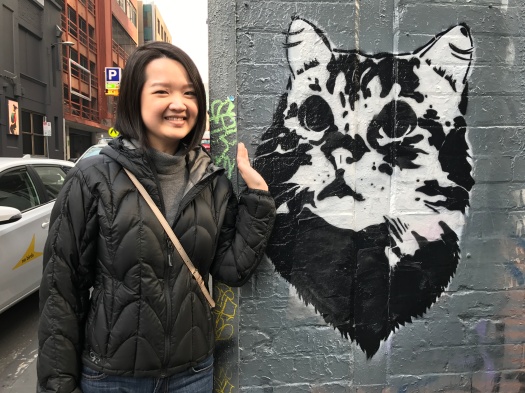
Yuet Ling in Melbourne CBD touring the City, Australia.
Punggol English Math Science Tutor Tuition Centre Primary Secondary Pri Sec 1 2 3 4 5 6
Tutor Yuet Ling LV Takashimaya. SGP.
Punggol Tutor Singapore Tuition Centre Primary Secondary Pri Sec 123456 PSLE O level GCE SEAB MOE Syllabus Tutor
Tutor Yuet Ling teaching a PSLE Creative Writing class. It is all about the students’ progress. Give it a go, organise their thoughts and arm them with the best knowledge.
Punggol English Math Science Tuition Small Group Tutor
Tutor Yuet Ling at LV MBS
Punggol Tutor English Math Science Small Group MOE Syllabus Tuition
Tutor Yuet Ling Stalactites Restaurant Melbourne CBD Australia
Punggol Tutor English Mathematics Science Tuition Centre Small group MOE SEAB Syllabus
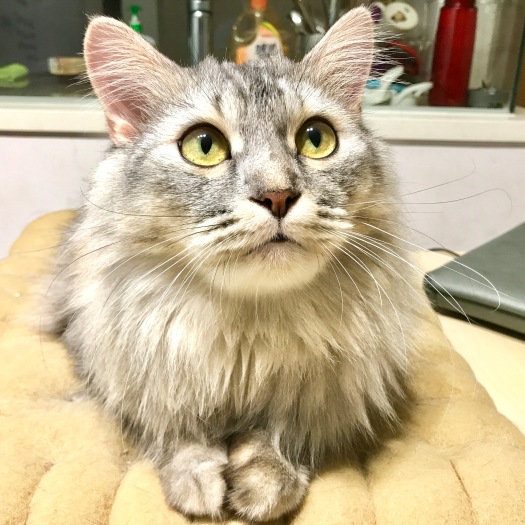
One of our residents Pebbles.

Optimism and its role in studying

There is a direct correlation between the optimism in a student and the success in studying. Just like the answer to the glass is half full or half empty, this concept is very much a question about the outlook and confidence of the individual. The optimism of students to how well they fare in their studies cannot be quantified easily but like with everything, it is always a matter of perspective.

So what is it about optimism?

Optimistic individuals tends to see the light. The light at the end of the tunnel. This tunneling effect blocks out all the other distractions and pains that comes packaged into an examination. This is akin to a 100m race and its training requirements. An athlete competing for a 100m race hits the gym, trains on the same 100m strip for years, only to feature in a race that lasts less than 10 seconds. Yes, other aspects of characteristics like determination, talent, etc is needed, but the optimist will definitely have an edge over the one that is pessimistic in this, who would have given up long ago, unable to see why one would go through it at all. It is about aiming for the light at the end of the tunnel and knowing that everything else will fall into place that gives the athlete a spring in their steps.

The same can be said for students who knows what they want. Aces in exams? Sure! Let’s go for it. Blocks out all the other distractions, and confidently knowing that it can be done.

How to keep a student optimistic?

Perspective. The ability to see it half full. Generally, the student that are optimistic tends to ask more questions and this is where teachers, tutors, and parents are required to be patient and explain without getting angry nor frustrated. How many students have tried asking but gave up the second time round knowing full well that their teachers will get angry if they didn’t get it the first time hands up! Yes, encourage students or your child to ask, and do not get angry if they don’t get it. Learning is heuristic in nature and requires students to gain the experience to attain mastery. If the student fails to experience it the first time round, it does not mean they are slow, it just means they are trying.

And trying is the best ingredient to success.

No one wants to be scolded. Especially if they are trying to learn something. And being scolded during their formative years are just sending out the wrong messages that will hinder their development.

In any learning environment, the basis of an education is the interaction between teachers and students. And the trust between students and teachers must be there to foster a strong bond in learning. The job of a student is to learn, and the job of a teacher is to teach. Failure to do this most basic requirement is usually the reason for an unsuccessful stint in school. A patient teacher who teaches properly but also encourages questions or repeats themselves to make sure their students gets it creates students who is unafraid to ask if they don’t get it. This creates a calm and trusting environment to study in.

With trust, confidence grows. With confidence, optimism grows.

written by 
Wong Kin Leong