Orchard Tutor ex-RJC grad/ACJC grad full time tutor for IGCSE IB Diploma IP GCE O level PSLE Primary, Secondary and International Schools Tuition Home Based Premium Education by eduKate Tuition Centre
Top 10 Idioms for PSLE English Syllabus, Singapore-eduKate Teaching Materials.
Idioms can add spice onto the canvas of your composition writing and when appropriately used, gives a dramatic effect and shows the mastery that you have attained. The idea here, while attempting PSLE, is to have a list of go-to tools that would cover almost every situation that you can come across. This helps pepper your composition, adding flavour and widen the spectrum of colour to your writing.
idiom-ˈɪdɪəm
-a group of words established by usage as having a meaning not deducible from those of the individual words (dictionary.com) Here’s 10 most useful idioms that you can use to almost every composition that you will see in PSLE.
A penny for your thoughts: asking someone’s thoughts
Best of both worlds: All advantages are in effect.
Can’t judge a book by its cover: Cannot judge something/someone on appearance alone.
Curiosity killed the cat: Being Inquisitive can lead you into an unpleasant situation.
Don’t put all your eggs in one basket: Do not put all your resources in one possibility.
Every cloud has a silver lining: Be optimistic, even difficult times will lead to better days.
In the heat of the moment: Overwhelmed by what is happening in the moment.
Kill two birds with one stone: To accomplish two different things at the same time.
Let the cat out of the bag: To share information that was previously concealed
Piece of cake: A job, task or other activity that is easy or simple.
Singapore PSLE English Language Syllabus Composition Writing Section-prepared by eduKate Tuition Centre
The following is a summarised class material for PSLE EL Syllabus under topic “types of character” that shall be used by eduKate for teaching PSLE candidates in their attempt of the PSLE EL Composition writing section.
Major Characters
Major characters are characters that appear sufficiently in the story to drive the story forwards. They are also characters that will let readers identify with and bond throughout the story.
Minor Characters
Minor characters are characters that appear in localised smaller parts of the story, and could add to driving the story, or not driving the story at all. Minor characters can be used to add to the richness of the story and provide a distraction or comic relief to the reader.
A person who never made a mistake never tried anything new.
Albert Einstein
eduKateSG Tuition Centre Primary Students at Prive Punggol Singapore
Protagonist
A protagonist is the main character and driver of the story. It creates movement of the plot and engages the reader’s imagination and empathy. The protagonist usually has character traits that readers identify with and is usually the hero or heroine of the story. This is not always true, with protagonists that can be evil, or even neutral to make things interesting for ther reader. The protagonist usually solves the conundrum in the story, or provides for a solution to the moral dilemma presented within the theme taken by the writer.
Antagonist
An antagonist is the counter character to the protagonist, creating friction and problems for the protagonist to negate. The antagonist is the other driver of the plot and, together with the antagonist, moves the plot to its conclusion. The antagonist presents a counter balance to the protagonist and could give a valuable insight for the reader into the protagonists character/actions/decisions. Again, the antagonist might be evil in nature, or could even be a hero in the story, which gives a twist to the general perception and again, makes things interesting for the reader.
Character Development
Dynamic Character
A dynamic character undergoes personality changes in the story plot, developing into another character or attaining a different outlook/experience. It usually takes a pivotal event in the plot where the character experiences monumental tasks and readjusts to cater for the change.
Static Character
A static character does not undergo any changes in the story. Usually static characters does not undergo any changes because throughout the story, a static character is hardly affected by climactic problems and soldiers on solving it.
eduKateSG Primary Students at Tampines
Instrumental Characters
Round Characters
A round character is fully developed to be complex and realistic. Depth of character and attention to details makes round characters malleable to changes in the plot and readers sympathise with round characters easily through empathy. Round characters also mimic reality and gives readers an insight into the character and keeps the story interesting.
Flat Characters
The reverse of round characters, flat characters are not fully delineated and usually only has one or two traits to carry through the story. Usually not the main character in the story, flat characters are important tools used to provide comic relief, or even instrumental to a change in the plot.
Foil
A foil is a character that contrasts another main character to make readers appreciate the difference. The intention of the foil is to make readers understand the other character its “foiling” better.
Symbolic
A symbolic character is a character that symbolises certain ideas or morals of society. The intention of symbolic characters are for readers to identify the hidden trademarks within the story and see its relevance to the theme of the story. It denotes clever writing and makes the reader appreciate its intelligence and its intrinsic fabrication by the writer.
This month, we are teaching eduKate students Critical Thinking Skills. Students will be receiving their notes and shall cover the below modules:
What is critical thinking?
What are the components of learning?
What are the procedures to achieve critical thinking?
How to interpret and analyse data?
What do we need to avoid doing to achieve a balanced result?
Importance of critical thinking in our education.
Aims of this module: To create awareness in students attempting questions in their exams. Relevance of critical thinking skills to English shall be applied to composition writing and answering comprehension questions during the first two lessons.
Composition
Students are required to demonstrate reasoning in their compositions and develop a realistic approach to story telling. During the process of creating a story, students shall use the 3 pictures composition approach introduced in the new syllabus PSLE format. The students are required to gather and include effective implementation of tools from their creative writing classes. They also need to draw from their past experiences when fabricating their plot.
Comprehension
Students are required to demonstrate critical thinking skills of the following basic 6 questions: who, why, where, when, what and how when attempting to resolve questions in the new syllabus format PSLE questions. They are also required to critique and infer from the passage using the said skill.
Have Science Tuition at our eduKateSG Punggol Tuition Centre.
This week in Science, we learn about the plant’s transport system and zoomed in on how water is transported from the roots to the other parts of the plant through the xylem tubes. To demonstrate this, we conducted a simple and fun activity that is easy to carry out at home as well.
Materials required:
Fresh white chrysanthemum or carnation
Water
Food coloring
Plastic bottle
Procedure:
Pour 1 cup of water into the plastic bottle and mix in 1/4 cup of food coloring.
Trim the stalk of the flower using a pair of kitchen scissors at an angle such that the base is pointed and not flat. (Water absorption may be affected if the base is flat and the stalk sits at the bottom of the bottle.)
Place the flower in the colored water and watch the petals change color!
Studying for the PSLE Syllabus? GCE O’ levels? IGCSE? IB IP Programme? Just had a talk with an MOE officer the other day and an interesting topic came up regarding time management skills of students. She said that in general, the most improved students came from those that instilled some skills on prioritising their work and studying time before attempting their exams. It is an essential studying skill that once inculcated into a habit, will improve grades and in general, the work efficiency of the student.
That brings me to write this article. Managing time effectively helps you to get your studies in order and into sharp focus. So here’s some tips and tricks that you can employ to great effect.
eduKate Tuition Class PSLE Syllabus Primary 6 English Tuition at Tampines
Prioritise:
What is important to you? Sit down, have a good think, write it down. Rate it in importance.
Do the most important work first. That lowers your stress levels and a chance of Murphy’s Law.
Procrastination:
Don’t do it.
That might sound easy to do, but takes a lot to get rid of from your system. “Hang on, let me finish this game” or “Maybe I’ll do it tomorrow.” Guilty? As charged!
How do we know we are procrastinating?
Catching yourself doing this:
Doing something less important and thinking that it is still work done anyways. Swapping out your top priorities into doing something useless makes you tired before you actually do what is important to you.
Saying that you will do it tomorrow.
Switching your work midway. Doing a sum and suddenly think you need to call your friend to check if she is home safe. Then walk into the kitchen to try to make yourself a hot drink. Then suddenly realise it is time to shower. No, the latest episode on TV is showing. What was I supposed to do again?
Doing a lot of planning and a week later, you are still in the planning stage.
Writing a lot of notes, neatly, color it, highlighting it. Making sure all your points are inside. Before you know it, exams starts tomorrow. Where did all the time go? Into making pretty notes… Yikes.
Saying I need to study more. I will do better, I am going to get an A1. All these sentences makes for a recipe for procrastination. Wishing you will do something about it gives you a false sense of doing something without doing it.
So how do we start on the journey of lesser procrastination? Fill your planner up. Stick to it. That is one reason why teachers gives you homework. They are trying to fill your schedule up, just like if you are working and your boss inundates you with work. They are trying to get you to start down the road of efficient time management. It is a microcosm of what you will end up handling when you start working. So don’t blame your teachers for giving you so much work, its training grounds for you to be able to handle the big bad world.
Secondary School Math tuition class eduKate Singapore
So here’s some tips on stopping the procrastination wolf from blowing your world down:
Get a routine
Morning to school, Afternoon back home. A good lunch and down to the books. Get in 3 solid study hours. A nice shower and keep yourself fresh. Nice dinner, an hour of YOU time. Then finish off your assignments. Off to sleep and repeat. And repeat. And repeat.
That is just an example. For yourself, tailor a routine that you are comfortable with and get used to it. Make small changes to make it more efficient and constantly evolve to make the routine relevant to your workload. That helps you in a few ways.
It lowers the need for you to figure out what to do next.
It makes you really good at what you do as you repeat it all day. Every day. Experience counts.
It makes you realise where the dead spaces are where you do nothing and plug those holes with work.
It helps you to organise your planner as you know how much you can do in a day in turn schedule your future plans effectively.
Makes you eek out small scraps of time that you didn’t know existed, like when you are brushing your teeth, spending too much time eating, etc.
Have a plan
Strategy wins a war. Take time to plan your winning strategy and know that you are the winner at the end. That helps you to put tangible milestones to your schedule. You know how far you are from achieving your aims. Clarity of aim gives you a perspective of the landscape you are traveling through. It also helps you to avoid putting things off. It has to be done by a certain time frame and you know when you are off track and needs a kick to get you going again.
Planners:
Have a planner and plan your time. Priorities that you want to achieve should be organised and work your way backwards. For example, if it takes you 6 weeks to complete your work, set a date you want to achieve it and count backwards 6 weeks. Put a start date to it. And have a countdown. Stick to the schedule and monitor your progress on the planner. If you are on track, put a tick. Getting slow on the planner, then put some exclamation marks on the planner to make you work harder to get you back on track.
Advantages:
this helps you in your work career learning how to meet deadlines.
avoid double booking yourself and end up too much to chew in too little a time.
spreading your workload into smaller bites and have a smoother climb up the skills ladder.
gain confidence with every success that you can do it and have the means to do it.
eduKate Singapore Tampines Tuition Centre Student doing Secondary Math
Make 24 hours turn into 25 hours a day.
This section is when you find that you have not much time left to your exams and you start seeing warning bells going off. Emergency tricks to make more time that we have not considered. Yes, there are things we do every day that we have not included into studying time. Like time travelling to and from school can be used to run through your notes. Gains you an hour just right there. Sitting on the potty. Showering. Brushing teeth and have some sticky notes on the mirror. Having a meal and gobble down a chapter of Physics as well. Multi tasking is the in thing. Replace low level tasks with study. Like dressing up, or even going to cut your hair when its really near your exams.
So there you go. A good effective time planning gives everyone a fair chance of achieving excellence. Like a mentor of mine said last time, Proper Planning Prevents Poor Performance.
Punggol Tuition Centre for English Math and Science


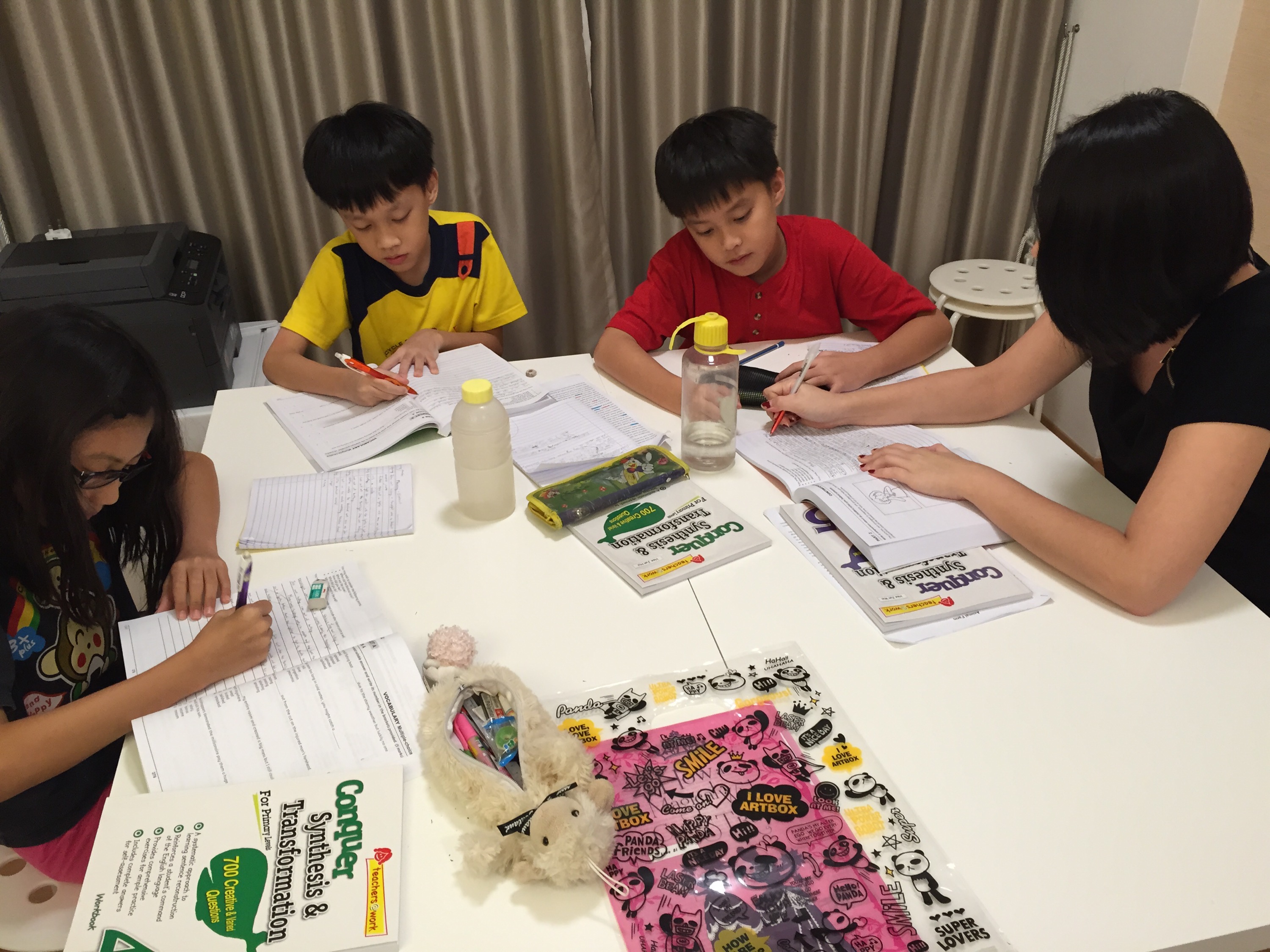



 Orchard Road Tutor English Math Science Small Group Tuition